30+ Đề thi Tiếng Anh 9 Giữa kì 1 năm 2026 (có đáp án)
Trọn bộ 30 đề thi Tiếng Anh 9 Giữa kì 1 sách mới Global Success có đáp án và ma trận sẽ giúp bạn ôn tập và đạt điểm cao trong bài thi Tiếng Anh 9.
30+ Đề thi Tiếng Anh 9 Giữa kì 1 năm 2026 (có đáp án)
Giáo viên & Phụ huynh quan tâm Đề thi Giữa kì 1 Tiếng Anh 9 bản word có lời giải chi tiết, dễ dàng chỉnh sửa và cập nhật hàng năm mời Xem thử.
Đề thi Tiếng Anh 9 Giữa kì 1 (cả nước)
Đề thi Giữa kì 1 Tiếng Anh 9 trường THCS Ngô Quyền (Hà Nội) năm 2024-2025
Đề thi Giữa kì 1 Tiếng Anh 9 trường THCS Ngô Sĩ Liên (Hà Nội) năm 2024-2025
Đề thi Giữa kì 1 Tiếng Anh 9 trường TH&THCS Đông Động (Thái Bình) năm 2024-2025
Phòng Giáo dục và Đào tạo .....
Đề thi Giữa kì 1 - Global Success
Năm 2026
Môn: Tiếng Anh 9
Thời gian làm bài: phút
I. LISTENING
Bài nghe:
Listen to two teenagers calling the helpline. Circle the best answer A, B or C. You will listen TWICE.
1. Lan is now feeling ______.
A. annoyed
B. frustrated
C. depressed
2. Lan can’t ______ all the deadlines.
A. remember
B. catch up with
C. finish
3. Lan feels she doesn’t need to work too hard because she’s not going ______.
A. to enter gifted schools
B. to continue her study
C. to have time for herself
4. Nam feels ______.
A. tired of his study
B. worried about his girlfriend
C. depressed
5. Nam’s friend _____________ in front of other students.
A. made use of him
B. made fun of him
C. made joke about him
II. READING
TASK 1. Read the following passage, then choose the correct answer to questions.
Smoking causes lung cancer, which is the number one cancer among men. Ninety percent of the people who get lung cancer die. Smoking is also the leading cause of mouth cancer, tongue cancer, and throat cancer.Many smokers have heart disease and pneumonia. Smoking causes one million early deaths in the world every year.
Smokers not only harm themselves but also harm others. Smokers breathe smoke out into the air. They breathe it out on their children and their wives or husbands. Children whose parents smoke have more breathing and lung problems than other children. Women who are married to smokers are more likely to have lung cancer than those married to non-smokers.
We are all aware that smoking is bad. So why do people smoke?
1. The number one cancer among men is____________. Nhận biết
A. tongue cancer
B. throat cancer
C. lung cancer
D. mouth cancer
2. The main cause of mouth cancer, tongue cancer and throat cancer is________. Nhận biết
A. drinking
B. overeating
C. breathing
D. smoking
3. Every year, smoking causes about one million____________. Thông hiểu
A. cancer patients
B. killing diseases
C. early deaths
D. injured men
4. The word “it” in the passage refers to____________. Vận dụng
A. cancer
B. smoke
C. air
D. breath
5. Who are more likely to have lung cancer and lung problems? Vận dụng
A. People who live in the city
B. People who live with smokers.
C. People who live with non-smokers.
D. People who live in the country.
TASK 2. Choose A, B, C or D to complete the following passage
Christmas is a family celebration and many of the customs center on children. When they go to bed on Christmas (1)…………..…, children hang up a pillow case or a sack for their presents (2)………………, it should be a stocking, but a stocking wouldn’t hold enough to become today’s kids. While the children are(3)………...., so the custom goes, Father Christmas or Santa Claus, comes (but also to children who have been good). He travels from the North Pole in a sleigh which is (4) ………….by reindeer. After landing on the roof, Santa Claus climbs down the (5) …………….and puts presents in the sacks that the children have left out.
1. A. Eve B. evening C. morning D. afternoon
2. A. Actually B. Traditionally C. Fortunately D. Usually
3. A. sleep B. asleep C. sleeping D. slept
4. A. pull B. to pull C. pulling D. pulled
5. A. tree B. chimney C. roof D. reindeer
III. WRITING
TASK 1. Rewrite the following sentences so that their meaning stays the same, using the words given.
1. I think Da Nang city is not so exciting as Ho Chi Minh City. (MORE)
=> I think Ho Chi Minh City……………………………………….................................
2. "Who should I call for help?" she asked. (TO)
=> She had no idea………………………………………………………………………
3. Tom arrived when everyone had gone home. (UP)
=> Tom...............................................................................................................................
4. Mai could have good marks. She studied hard for the exam. (SO THAT)
=>……………………………………………………………………………………….
TASK 2. You received an email from Mark, your penfriend in the US. He asks you to write him about the things you like in your community. Now write an email (about 100 words) to tell him about these things.
From: ____________________@quickmail.com (your email address)
To: mark@fastmail.us
Subject: My lovely community
Dear Mark,
I’m happy to have received your email, I’m going to tell you about the things I like in my community.
_____________________________________________________________________________________________________________________________________________________________________________________________________________________
That’s all for now, Mark. Tell me about your community.
Cheers,
______________
IV. LANGUAGE FOCUS
TASK 1. Choose the word whose underlined part pronounced differently from that of the others by circling A, B, C or D
1. A. pottery B. local C. control D. so
2. A. artisan B. establish C. attraction D. handicraft
TASK 2. Choose the best answer to complete the sentences.
1. I am trying to learn English _____ I can communicate with foreigners.
A. so that
B. when
C. although
D. because
2. Lan couldn’t decide _____ to work with on the project
A. what
B. who
C. how
D. when
3. Minh is _____ the most successful student in my class.
A. so long
B. by how
C. so now
D. by far
4. The artisans in my village can live _____ basket weaving.
A. for
B. on
C. up
D. in
5. The flower was _______ out of a single piece of valuable wood.
A. carved
B. moulded
C. cast
D. knitted
6. John cannot make a ______ to get married to Mary or stay single until he can afford a house and a car.
A. decide
B. decision
C. decisive
D. Decisively
7. Chaul Chnam Thmey is ______ festival of the Khmer people.
A. the biggest
B. as big as
C. bigger than
D. bigger
8. Studies show that having good conflict ______ skills is associated with various positive outcomes.
A. resolutional
B. resolving
C. resolve
D. resolution
Lưu trữ: Đề thi Giữa kì 1 Tiếng Anh 9 (sách khác)
Phòng Giáo dục và Đào tạo .....
Đề thi Giữa kì 1 - Smart World
Năm 2026
Môn: Tiếng Anh 9
Thời gian làm bài: phút
Listen to Hans and Mr. Ford talking about English learning. Tick T (true) or F (false).
Bài nghe:
|
|
True |
False |
|
Question 1. Hans wants to study abroad when he turns sixteen. |
|
|
|
Question 2. Mr. Ford says that Hans needs to read comics to build a strong vocabulary. |
|
|
|
Question 3. Mr. Ford says that Hans needs to work on grammar because it's helpful. |
|
|
|
Question 4. Hans can learn grammar rules and use them correctly with a grammar book. |
|
|
|
Question 5. Mr. Ford says to Hans that he should not make grammatical mistakes. |
|
|
Circle the word that has the underlined part pronounced differently from the others.
Question 6. A. garage B. garbage C. gallery D. imagination
Question 7. A. lyric B. exercise C. improve D. internet
Question 8. A. Japanese B. amazing C. geography D. pagoda
Circle the word that has a stress pattern different from the others.
Question 9. A. figure B. foreign C. content D. career
Question 10. A. official B. relative C. difficult D. positive
Circle the letter A, B, C, or D to indicate the correct answer to each of the following questions.
Question 11. The teacher turned on the projector _______ some English videos to her students.
A. showing
B. shown
C. show
D. to show
Question 12. My sister got _______ last year. She seems happier now.
A. divorced
B. childless
C. married
D. relative
Question 13. _______ you _______ in a cottage when you were a kid?
A. Did – use to live
B. Did – used to live
C. Do – used to live
D. Do – use to live
Question 14. I always _______ new words so that I don’t forget them.
A. look up
B. note down
C. turn on
D. search for
Question 15. When I was a kid, I _______ stay at my grandma’s house after school.
A. would
B. may
C. will
D. can
Question 16. Dennis wants to take extra English classes after school _______ he's not good at it.
A. owing to
B. due to
C. as
D. because of
Question 17. My aunt finally got a son after five years of _______.
A. marriage
B. married
C. marry
D. marriageable
Question 18. It's common to come _______ unfamiliar words when you read English books.
A. over
B. up
C. down
D. across
Question 19. In our country, we speak Vietnamese, our native language, and learn English as a _______ language.
A. local
B. common
C. formal
D. foreign
Circle the letter A, B, C, or D to indicate the most suitable response to complete each of the following questions.
Question 20. Phil: I plan to study overseas in New Zealand. - Don: _______.
A. Really? Why?
B. Are you free today?
C. Do you have a minute?
D. Can you call me back?
Question 21. Elen: Do you have any plans for the weekend? - Ben: _______.
A. It's sunny.
B. That's a good idea.
C. I'm sorry to hear that.
D. Nothing special. Why?
Circle ONE mistake in each sentence.
Question 22. When (A) Jake was (B) a student, he often would (C) make his own (D) lunch.
Question 23. Liam improved (A) his English since (B) of all the (C) English courses (D) he took.
Question 24. When my sister was (A) a child, she would playing (B) with her (C) toy dolls for (D) many hours.
Question 25. My niece would (A) work as a baker in (B) a big supermarket, but (C) she is working in (D) a hotel now.
Read the following passage and circle the letter A, B, C, or D to indicate the correct answer that best fits each of the numbered blanks.
Family life used to be very different (26) _______ it is today. Back then, it was common for families with three or even four generations to live together. This meant that grandparents, parents and their children all (27) _______ together. When people of different generations got together, they often shared their knowledge and experiences with each other.
But all that changed in the modern world, and the idea of an extended family is not as common as it (28) _______. Most people today live in (29) _______ nuclear families. In other words, a family today typically consists of solely the parents and their children. Grandparents (30) _______ other relatives often live in different places. Because of this, the way people communicate is also different. Families now rely more on online communications than on being together in person to talk to each other.
Question 26. A. in B. on C. to D. from
Question 27. A. live B. lives C. lived D. living
Question 28. A. used to be B. use to be C. were D. use to
Question 29. A. no article B. a C. an D. the
Question 30. A. but B. or C. and D. for
Read the following passage and circle the letter A, B, C, or D to indicate the correct answer to each of the questions.
There are many ways to learn English, and each has its own benefits and effectiveness. One popular method is learning English online. There are a lot of websites, apps and online courses that are suitable for different language levels. You can learn to read, write and speak English through video lessons, practice exercises and even real-time conversations with native speakers. However, it is important to remember that the internet alone might not be enough to help you learn well and improve your English language skills. It is essential to support your online learning with other activities and resources.
Another good way is reading English books, newspapers or magazines. This activity can help you learn new words, improve your grammar and grasp sentence structure. You can start with materials that are right for your English level, then continue with more difficult texts. You can also improve your English by listening to podcast music and watching movies. This will allow you to hear different accents and improve your listening skills. Finally, think about taking an English language course if you can. In a classroom with an experienced instructor, you can get help, feedback and a chance to practice with other students.
Question 31. What is the best title for the text?
A. Online English
B. Ways to Learn English
C. Reading Textbooks
D. English Speakers' Talks
Question 32. Which word has the CLOSEST meaning to the word method in paragraph 1?
A. way
B. tool
C. device
D. utensil
Question 33. What does the word materials in paragraph 2 refer to?
A. cloths
B. tools
C. articles
D. resources
Question 34. Which word has the CLOSEST meaning to the word accents in paragraph 2?
A. methods
B. subtitles
C. lyrics
D. pronunciations
Question 35. According to the text, which is NOT mentioned as a suggestion for learning English?
A. reading English texts
B. traveling to another country
C. talking with native speakers
D. practicing through video lessons
Rewrite the following sentences using the given words. Do not change the original meaning.
Question 36. I listen to English music. Listening to English music improves my listening skills. (to)
→ ____________________________________________________________
Question 37. I walked to school every day. Walking to school every day was a regular habit for me. (used to)
→ ____________________________________________________________
Question 38. Since Liam performed excellently, he won first place in the English-speaking contest.
→ Because of ___________________________________________________
Put the words in the correct order to make complete sentences.
Question 39. My pronunciation / as / improved / I / practiced / reading / every day. / aloud
→ ____________________________________________________________
Question 40. families / the / Most / in / people / past. / lived / in / extended
→ ____________________________________________________________
Phòng Giáo dục và Đào tạo .....
Đề thi Giữa kì 1 - Friends plus
Năm 2026
Môn: Tiếng Anh 9
Thời gian làm bài: phút
Listen to a conversation between a school counsellor and some students. Write T (True) or F (False) for each statement. (here)
Bài nghe:
|
Question 1. The counsellor is giving advice on how to maintain good physical and mental health. Question 2. According to the girl’s parents, students should not sleep for more than eight hours daily. Question 3. Many students manage to sleep well the night before exams. Question 4. The boy is unsure about how to lead a well-balanced life. Question 5. The school counsellor recommends that the students divide their time evenly between studying and playing. |
_______ _______ _______ _______ _______ |
Choose the word whose underlined part is pronounced differently from that of the others.
Question 6. A. rare B. damaged C. fact D. fragile
Question 7. A. dependent B. decisive C. pretty D. effort
Choose the word that has a different stress pattern from that of the others.
Question 8. A. essential B. transport C. commute D. around
Question 9. A. advantage B. benefit C. probably D. business
Choose the correct answers A, B, C, or D.
Question 10. Jimmy made no effort to make friends with Darren, ________?
A. did he
B. didn’t he
C. had he
D. hadn’t he
Question 11. Most of the boys had a Playstation, Xbox, or other ________.
A. app
B. game console
C. HDTV
D. VR headset
Question 12. When my dad met my mum, he ________ as a bus driver.
A. worked
B. had worked
C. was working
D. have worked
Question 13. I never lend books—you never ________.
A. remember them
B. remind them
C. look back on them
D. get them back
Question 14. ________ TV for the last four hours? Turn it off and get some exercise!
A. Do you watch
C. Watched you
B. Are you watching?
D. Have you been watching
Question 15. When Joelle ________ over her order, the waiter gave her an impatient look.
A. considered
B. bothered
C. hesitated
D. avoided
Question 16. ________ Eve walked through the door I thought she looked different.
A. By the time
B. The moment
C. In the end
D. Meanwhile
Question 17. I’m ________ hiring him: he seems well-qualified, but he doesn’t have much experience.
A. in two minds about
B. up to
C. leaning towards
D. reckoning
Question 18. Choose the correct answer to rewrite the sentence: ‘Those in favour said that children should be free to choose what they do in their free time.’
A. People who agree argued that children ought to be free to decide their activities during leisure time.
B. People who support this believed that children must choose how to spend their free time.
C. Those who agree stated that children can be free to select their activities whenever they want.
D. Those who support this thought that children should have the freedom to always choose their hobbies.
Look at the messages / signs and choose the best answer (A, B, C or D).
Question 19. What has Alex’s mom done for him before she goes to work?
Dear Alex,
I’ve prepared dinner and left it in the fridge for you. Just warm it up when you get hungry. I have to stay at work a little longer than expected, so I’ll be home late. Make sure to finish your homework and get to bed on time.
Love you lots,
Mom
A. left money for him to buy dinner
B. asked him to make his own dinner
C. cooked dinner and told him to find it in the fridge
D. ordered takeout for him and left instructions in the fridge
Question 20. What does this sign mean?
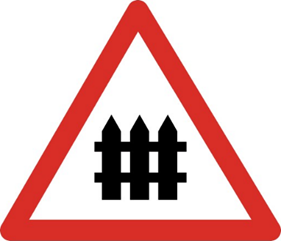
A. Warning for a fenced area ahead
B. Caution for an upcoming bridge
C. Indication of a nearby playground
D. Warning for a railway crossing ahead
Give the correct form of each word in brackets to complete the sentences.
Question 21. Fitness trackers are __________ devices that can help you move more, sleep better, and improve your overall health. (WEAR)
Question 22. You, crying at a film! You would get very __________ in your old age! (SENTIMENT)
Question 23. Amelie wants to be a(n) __________ mother, staying at home and looking after the children. (FASHION)
Question 24. __________ drivers cause accidents. (CARE)
Question 35. Parents are ever __________ for their children. (FEAR)
Read the following passage and write one suitable word in each gap.
Memorabilia are things that people collect because they once (Q26) ________ to a famous person, or are connected with an interesting place, event or activity. Balls that were used in a great match, props from popular movies, clothes that famous people (Q27) ________ to wear and first editions of books are all examples of valuable memorabilia.
If you want to own a piece of valuable memorabilia, you can (Q28) ________ across some interesting items in second-hand shops. Sometimes, an old collector dies, and their spouse gives (Q29) ________ their possessions without realising their value. You could also try to predict who will become famous in the future. Getting some shoes or a ball signed by someone who isn’t (Q30) ________ yet is not too hard. Then you just have to wait until they do something spectacular!
Read the following passage and choose the correct answers A, B, C, or D.
Mr Nam, grandfather, a 70-year-old farmer
I was one of the few children in my village who was still at school at the age of 15. Every day, I got up early and walked to school. Learning then depended mostly on our teachers and textbooks. We had no library or lab. The nearest bookshop was six kilometres away. I learned simply by taking notes during class, memorising them, and doing the homework. Life then was simple. We rarely travelled outside our village, so we didn’t know much about the world around us.
Mai, granddaughter, a 15-year-old student
Learning today is very different from my grandfather’s time. It is easier and more convenient. Besides learning from teachers and textbooks, we use the Internet. It provides us with various online sources such as documents, clips, and programmes. Google helps us find the answers to almost any questions we have. The Internet also allows us to pursue our own interests. Learning has become more independent. Although most children in my village have fewer private learning facilities than the students in the city, we are still luckier than my grandfather's generation. We have TVs to watch at home and a library and computers at school.
Question 31. In Mr Nam’s time, __________.
A. teachers played an important role
B. bookshops did not exist
C. students had to wake up early and go to school on foot
D. all children stayed on at school until they were 15
Question 32. Few people travelled outside their village, so __________.
A. life in the village was simple
B. his school lacked learning facilities
C. the villagers had limited knowledge about the world
D. none of the villagers knew about city life
Question 33. Modern learning __________.
A. does not require textbooks
B. makes use of online programmes
C. relies only on the Internet
D. does not require students to take notes
Question 34. The word ‘It’ refers to __________.
A. today’s learning
B. Mai’s grandfather’s time
C. Google
D. the Internet
Question 35. The word ‘we’ refers to __________.
A. learning facilities
B. students in Mr. Nam’s generation
C. students in the city
D. children in the village
Complete each second sentence using the word given so that it has a similar meaning to the first sentence. Write between two and five words in each gap.
Question 36. It’s only Sasha’s second time in a recording studio. been
→ Sasha __________________________ in a recording studio once before.
Question 37. My parents wouldn’t let me stay out late when I was young. used
→ My parents __________________________ let me stay out late when I was young.
Question 38. I ran 15 miles, and then my trainer told me to do 50 push-ups! already
→ When my trainer told me to do 50 push-ups, I _____________________ 15 miles!
Question 39. Doug wasn’t shortlisted for the job even though he had a great CV. spite
→ Doug wasn’t shortlisted for the job __________________________ a great CV.
Question 40. Hang-gliding can be dangerous, but after a while you don’t mind it. used
→ Hang-gliding can be dangerous, but after a while you ____________________ it.
Phòng Giáo dục và Đào tạo ...
Đề thi Giữa kì 1 - Right on
năm 2025
Môn: Tiếng Anh 9
Thời gian làm bài: phút
(Đề số 1)
PART 1. LANGUAGE
Mark the letter A, B, C or D to indicate the word whose underlined part is pronounced differently from the others.
1.
A. code
B. cold
C. bowl
D. oil
2.
A. likes
B. closes
C. updates
D. hopes
Mark the letter A, B, C or D to indicate the word that differs from the other three in the position of primary stress in each of the following questions.
3.
A. travel
B. finish
C. fancy
D. deny
4.
A. factory
B. grandparent
C. Vietnamese
D. skyscrapers
Mark the letter A, B, C or D to indicate the correct answer to complete each of the sentences.
5. People can easily _________ the Northern Lights in Norway, Greenland, and Iceland.
A. make
B. see
C. hit
D. occur
6. She refused to _______ gifts from strange people when she travelled abroad.
A. receive
B. received
C. receiving
D. receives
7. Many young people like to make new __________ on social media to share information about their lives.
A. letters
B. entries
C. messages
D. emails
8. While my sister ________ a vlog, my brother _________ me with editing the video.
A. recorded/ helped
B. was recording/ was helping
C. recorded/ was helping
D. was recording/ helped
9. The city planners are working to find better waste __________ to reduce rubbish in our city.
A. solutions
B. facilities
C. challenges
D. opportunities
10. It's enjoyable to learn English ________ you can watch films and listen to music in English.
A. although
B. because
C. in spite of
D. because of
Complete the conversation using the sentences in the box. Fill A, B, C, D or E.
|
A. That's right! B. Well, I don't know, but I love having a house that has smart solar panels. C. They generate electricity that can make us less dependent on fossil fuels. D. I also like having a house with enough space to grow vegetables. E. Do you like the idea of living in a smart house, Jane? |
Mia: 11) ___________
Jane: Yes, I do. I want to live in a house whose smart security system can keep everyone safe. How about you?
Mia: 12) ___________
Jane: Why?
Mia: 13) ___________
Jane: Exactly! Using solar power can also save you money on electricity bills.
Mia: 14) ___________
Jane: That's a good idea, and it's better for the environment too.
Mia: 15) ___________
PART 2. READING
Read the following passage and mark the letter A, B, C, or D to indicate the correct word that best fits each of the numbered blanks.
ETHAN'S FAMILY
Ethan lives in a village with his family. The family (26) _________ his grandfather, his parents, and two sisters. They all have things they like doing every day. Ethan's grandfather enjoys (27) _________ to the radio and playing chess. He is very strong because he does exercise every day. When Ethan came to the garden yesterday, his grandfather (28) _________ a horse. He often took Ethan on a horseback ride to the local market and Ethan really enjoyed it. He wishes he (29) _________ ride a horse to school one day. Ethan's parents are traditional. They like playing board games with their children and wearing traditional clothes for special occasions. They have accounts on (30) _________, but they seldom share or post anything online. Instead of texting, they prefer writing letters and waiting for weeks to get a response. It's not common now, but that's something special about them that Ethan really loves.
16.
A. include
B. includes
C. included
D. including
17.
A. listening
B. watching
C. playing
D. talking
18.
A. rode
B. is riding
C. rides
D. was riding
19.
A. can
B. may
C. could
D. must
20.
A. diaries
B. social media
C. messages
D. emails
Read Tina's blog post about her family's trip to the Great Barrier Reef. Write T (right), F (wrong) or NI (doesn't say).
I learned about natural wonders in school today, and luckily, I had the chance to visit one of these wonders last summer - the Great Barrier Reef.
The Great Barrier Reef is located off the coast of Queensland, Australia. It is home to the world's largest coral system, which spans over 2,300 kilometres. These amazing coral formations can be seen both above and below the sea. Because a helicopter tour was too expensive for us, we took a boat tour to take in the breathtaking views. The scenery was so stunning, and we couldn't resist taking countless photos.
During our visit, we had the chance to explore this fascinating natural wonder by taking part in a variety of activities, including snorkelling, scuba diving, swimming, and water rafting. It was interesting to learn that corals are not plants but rather animals! The Great Barrier Reef is an enchanting world full of over 1,500 species of fish and 400 species of corals, each with a stunning array of colours, shapes, and sizes.
With its bright sun, golden beaches, and thriving coral reef ecosystems, this extraordinary place is one of the most beautiful destinations for visitors. Our trip was fantastic and left us with priceless memories; I can't stop telling my friends about it. If you ever get the chance to visit, remember to bring your aquatic gear so you can participate in water-based activities.
21. The Great Barrier Reef is one of the world's largest coral systems.
22. Tina and her family preferred the boat tour to the helicopter tour because it was more exciting.
23. They were able to learn about the place by participating in various water activities.
24. Most of the species in the coral reef have similar colours, shapes and sizes.
25. Tina recommends that visitors drink enough water while engaging in the activities.
PART 3. WRITING
Rearrange the given words to make complete sentences.
26. should / You / a lot of / avoid / cash / carrying / travelling abroad. / when
=> _______________________________
27. playing / games / Chris / days. / these / isn’t / online
=> _______________________________
Combine the sentences using the words in brackets.
28. John entered the room. His friend was trying to call him on the phone. (when)
=> When __________________________
29. My sister attends evening English classes because of her desire to get a good job.
=> As _____________________________
30. Although Emma knows the benefits of eating beans, she doesn't eat any.
=> Despite __________________________
PART 4. LISTENING
Listen to Lisa and Paul talking about their living environment. Write T (true) or F (false).
31. Paul agrees that the city's living environment needs to improve.
32. Lisa suggests adding more walking and biking paths for better air quality.
33. Paul thinks that effective trash recycling could benefit the air and water.
34. There are only some programmes that need volunteers.
35. Lisa suggests two volunteer programmes.
Listen to the dialogue between Laura and Ben. Choose the best option (A, B, C or D).
36. What did Ben do yesterday?
A. He went to his friend's party.
B. He shopped at the market.
C. He wrote a new blog post.
D. He visited his grandparents.
37. What did Ben's grandmother do in the past?
A. She listened to the radio every day.
B. She went to the market every day.
C. She shopped online.
D. She played computer games.
38. According to Laura, what do people NOT usually do these days?
A. wear traditional clothes
B. play computer games
C. shop in the markets
D. eat out
39. What do Ben and Laura agree about modern ways of life?
A. It is getting more difficult.
B. People spend less time with their families.
C. It is as fast as it was.
D. People live more simply.
40. What did Laura say about her grandparents?
A. They prefer the busy modern lifestyle.
B. They want to live their lives in the past.
C. They want to spend more time with her.
D. They are not happy with their lives in the past.
Phòng Giáo dục và Đào tạo .....
Đề thi Giữa kì 1
Môn: Tiếng Anh 9
Thời gian làm bài: 90 phút
(Đề 1)
I. MULTIPLE CHOICE: (8 points )
Mark the letter A, B, C or D on your answer sheet to indicate the word whose underlined part differs from the other three in pronunciation in each of the following questions.
Question 1 :
A. impressed B. disappointed C. wished D. stopped
Question 2 :
A. destination B. vacation C. question D. inspiration
Mark the letter A, B, C or D on your answer sheet to indicate the word that differs from the other three in the position of primary stress in each of the following questions.
Question 3 :
A. famous
B. workshop
C. village
D. bamboo
Question 4 :
A. design
B. mention
C. prefer
D. consist
Mark the letter A, B, C or D on your answer sheet to indicate the underlined part that needs correction in each of the following questions.
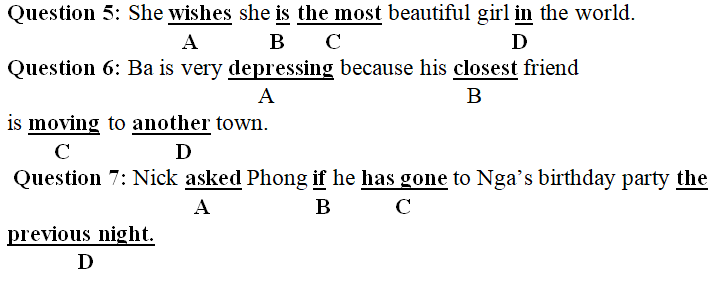
Mark the letter A, B, C or D on your answer sheet to indicate the correct answer to each of the following questions.
Question 8 : For that artisans, making the paintings is a career ______ it supports the life of many generations of the family.
A. because of
B. although
C. so that
D. because
Question 9 : Vietnamese women today prefer modern clothes ______ Ao Dai.
A. for
B. to
C. in
D. with
Question 10 : Should all motorcyclists be __________to wear helmets?
A. interested
B. dangerous
C. impressed
D. compulsory
Question 11 : I rarely eat ice cream now but I______ it when I was a child.
A. eat
B. used to eat
C. would eat
D. will eat
Question 12 : He wondered _________to tell the news to his parents.
A. why
B. how
C. what
D. which
Question 13 : I wish my parents could put themselves in my ______
A. shoes
B. bags
C. blanket
D. heart
Question 14 : The children in my village used to go ______, even in winter. Now they all have shoes.
A. on foot
B. bare-footed
C. playing around
D. played around
Question 15 : You should take your shoes……………….when you go into the pagoda.
A. on
B. up
C. off
D. in
Question 16 : He was lazy ______ he was dismissed. Now he's out of work.
A. because
B. since
C. so
D. as
Mark the letter A, B, C or D on your answer sheet to indicate the most suitable response to complete each of the following exchanges.
Question 17 : “Thank you very much for your help.” “______”
A. It’s quite OK.
B. That’s right.
C. I’d love to.
D. You’re welcome.
Question 18 : Phuong: “I’m taking my TOEFL test tomorrow.”
Daisy: “_________”
A. Good fortune
B. Good luck.
C. Good outcome.
D. Good success.
Mark the letter A, B, C or D on your answer sheet to indicate the word(s) CLOSEST in meaning to the underlined word(s) in each of the following questions.
Question 19 : The graduation is sad, because the time we studied together has come to an end.
A. succeeded
B. begun
C. finished
D. changed
Question 20 : Everyone has their own style of studying. I prefer to study by myself so I am not disturbed.
A. location
B. method
C. culture
D. network
Mark the letter A, B, C or D on your answer sheet to indicate the word(s) OPPOSITE in meaning to the underlined word(s) in each of the following questions.
Question 21 : Fruit and vegetables grew in abundance on the island. The islanders even exported the surplus.
A. large quantity
B. small quantity
C. excess
D. sufficiency
Question 22 : At 8 o’clock the plane took off into the air and soared above the clouds.
A. decreased
B. got dressed
C. landed
D. slowed down
Read the following passage and mark the letter A, B, C, or D on your answer sheet to indicate the correct word or phrase that best fits each of the numbered blanks.
Jeans are very popular with (23) _________ people all over the world. Some people say that
jeans are the “uniform” of youth. But they haven’t always been popular. The story of jeans started (24) _________ two hundred years ago. People in Genoa, Italy made pants so the cloth made in Genoa (25) _________ “jeanos”. Accordingly, the pants were called “jeans”.
In 1850, a salesman in California began selling pants made of canvas. His name was Levi Strauss. Because they were so strong, “Levi’s pants” became (26)_________ gold miners, farmers and cowboys. Six years later, Levi began making his pants with blue cotton cloth called denim. Soon after, factory (27) _________in the US and Europe began wearing jeans. At the time, young people actually didn’t wear them very much until later on.
Question 23 :
A. rich
B. old
C. young
D. poor
Question 24 :
A. utmost
B. closely
C. hardly
D. almost
Question 25 :
A. called
B. calls
C. was calling
D. was called
Question 26 :
A. famous
B. popular
C. good
D. wonderful
Question 27 :
A. workers
B. drivers
C. cowboys
D. farmers
Read the following passage and mark the letter A, B, C, or D on your answer sheet to indicate the correct answer to each of the questions.
It is often considered that the schoolyard is where bullies go to make other kids a miserable school life, but a new study suggests that classrooms are another popular place.
The study, presented recently at the American Public Health Association’s yearly meeting in Philadelphia, is based on the results of the research from more than 10,000 middle school students who answered questions online.
Of those researched, 43% said they’d been physically bullied within the last month. A bit more than half said they had been laughed at in an unfriendly way, and half reported being called hurtful names. About one third said groups had excluded them to hurt their feelings. 28% said their belongings had been taken or broken; 21% said someone had threatened to hurt them. According to the results, two-thirds of the students said they had been bullied in more than one way over the previous month.
The study authors mentioned that 8% of the students who answered said they had missed school at least once during the school year because of fear of being bullied, 25% said they had taken other actions, such as missing recess, not going to the bathroom or lunch, missing classes, or staying away from some area of the school to escape from experiencing a bully. Bullies did too much to the school life.
Question 28 : Bullies can happen in the following places EXCEPT_________.
A. schoolyards
B. classrooms
C. bathrooms
D. teachers’ offices
Question 29 : The underlined phrase “laughed at” in the passage is closest in meaning to_________.
A. made fun of
B. smiled nicely
C. shouted at
D. looked after well
Question 30 : Which of the following might some students do to protect themselves from bullies?
A. They miss school.
B. They call their parents for help.
C. They try to hurt others.
D. They break others’ belongings
Question 31 : How does the writer feel about bullies at school?
A. Excited
B. Disappointed
C. Worried
D. Puzzled
Question 32 : Which of the following is probably the best title for the passage?
A. Bad School Life
B. Bullies at school
C. Fear at school
D. School problems
II. WRITING: (2 points)
Finish the second sentence so that it has a similar meaning to the first one, beginning with the given words.
Question 33 : I have never read such a romantic story.
⇒ This is the..........................................................................................
Question 34 : The boy is sorry he doesn’t have his teacher’s address.
⇒ The boy wishes...........................................................................................
Question 35 : “ Will you spend your vacation in Ha Long next year?”, Liz said to us.
⇒ Liz asked....................................................................................................
Question 36 : They believe that the robbers got into the bank through the roof.
⇒ The robbers....................................................................................................
Combine the sentences into a new one using the given words in brackets. Do NOT change the given words in any ways.
Question 37 : I want to have more books. I work part-time to earn extra money. (because)
...................................................................................................
Question 38 : She was very tired. She could not stand up. (so….that)
...................................................................................................
Question 39 : I think it’s supposed to rain today. You should bring your umbrella with you. (so)
...................................................................................................
Question 40 : When I was a child. We lived in Bristol. (used)
...................................................................................................
Đáp án và Hướng dẫn làm bài
| 1. B | 2. C | 3. D | 4. B |
| 5. B | 6. A | 7. C | 8. D |
| 9. B | 10. D | 11. B | 12. B |
| 13. A | 14. B | 15. C | 16. C |
| 17. B | 18. D | 19. C | 20. B |
| 21. B | 22. C | 23. C | 24. D |
| 25. D | 26. B | 27. A | 28. D |
| 29. A | 30. A | 31. C | 32. B |
Question 33. This is the most romantic story I have ever read.
Question 34. The boy wishes he had his teacher’s address.
Question 35. Liz asked us if/whether we would spend our vacation in Ha Long the following year.
Question 36. The robbers are believed to have got into the bank through the roof.
Question 37. Because I want to have more books, I work part-time to earn extra money.
Question 38. She was so tired that she could not stand up.
Question 39. I think it’s supposed to rain today, so you should bring your umbrella with you.
Question 40. We used to live in Bristol.
1. B
Kiến thức: Phát âm đuôi “ed”
Giải thích:
A. impressed /ɪmˈprest/
B. disappointed /ˌdɪsəˈpɔɪntɪd/
C. wished /wɪʃt/
D. stopped /stɑːpt/
Quy tắc: Có 3 cách phát âm đuôi “ed”:
- /ɪd/: Khi động từ có phát âm kết thúc là /d/, /t/
- /t/: Khi động từ có phát âm kết thúc là: /f/, /p/, /k/, /ʃ/, /tʃ/
- /d/: Với các trường hợp còn lại
Phần gạch chân phương án C được phát âm là / ɪd /, còn lại phát âm là /t/.
2. C
Kiến thức: Phát âm “tion”
Giải thích:
A. destination /ˌdestɪˈneɪʃn/
B. vacation /vəˈkeɪʃn/
C. question /ˈkwestʃən/
D. inspiration /ˌɪnspəˈreɪʃn/
Phần gạch chân phương án C được phát âm là /tʃən/, còn lại phát âm là /ʃn/.
3. D
Kiến thức: Trọng âm từ có 2 âm tiết
Giải thích:
A. famous /ˈfeɪməs/
B. workshop /ˈwɜːrkʃɑːp/
C. village /ˈvɪlɪdʒ/
D. bamboo /ˌbæmˈbuː/
Phương án D có trọng âm rơi vào âm tiết 2, còn lại là âm tiết 1.
4. B
Kiến thức: Trọng âm từ có 2 âm tiết
Giải thích:
A. design /dɪˈzaɪn/
B. mention /ˈmenʃn/
C. prefer /prɪˈfɜːr/
D. consist /kənˈsɪst/
Phương án B có trọng âm rơi vào âm tiết 1, còn lại là âm tiết 2.
5. B
Kiến thức: Câu ước
Giải thích:
S + wish(es) + S + V_ed ⇒ dùng để diễn tả điều ước về 1 sự việc không có thật trong hiện tại
Sửa: “is” ⇒ “was”
Tạm dịch: Cô ấy ước cô ấy là cô gái xinh đẹp nhất trên thế giới.
6. A
Kiến thức: Từ vựng
Giải thích:
depressing (adj): buồn tẻ (dùng để chỉ tính chất của sự việc)
depressed (adj): buồn bã (dùng để chỉ cảm xúc của con người về 1 sự việc)
Sửa: “depressing” ⇒ “depressed”
Tạm dịch: Ba thì rất buồn bởi vì người bạn thân nhất của cậu ấy sẽ chuyển tới một thành phố khác.
7. C
Kiến thức: Lời nói gián tiếp
Giải thích:
S1 + asked + S2 + if + S + V_lùi thì
Sửa: “has gone” ⇒ “had gone”
Tạm dịch: Nick đã hỏi Phong cậu ấy đã đi tới bữa tiệc sinh nhật tối qua của Nga không.
8. D
Kiến thức: Mệnh đề chỉ nguyên nhân
Giải thích:
Sau chỗ trống cần điền là một mệnh đề
A. because of + N/ V_ing: bởi vì cái gì ⇒ loại
B. although + S + V: mặc dù
C. so that + S + V: để mà
D. because + S + V: bởi vì ...
Tạm dịch: Với những nghệ nhân đó, vẽ tranh là một nghề nghiệp bởi vì nõ hỗ trợ cuộc sống của nhiều thế hệ trong gia đình.
9. B
Kiến thức: Giới từ
Giải thích: prefer sth to sth: thích cái gì hơn cái gì
Tạm dịch: Phụ nữ Việt Nam ngày nay thích các trang phục hiện đại hơn Áo dài.
10. D
Kiến thức: Từ vựng
Giải thích:
A. interested (adj): quan tâm, hứng thú
B. dangerous (adj): nguy hiểm
C. impressed (adj): ấn tượng
D. compulsory (adj): bắt buộc
Tạm dịch: Tất cả những người lái xe mô tô có nên bắt buộc phải đội mũ bảo hiểm không?
11. B
Kiến thức: Thì quá khứ đơn
Giải thích:
S + used to + V_nguyên thể ⇒ dùng để diễn tả một thói quen trong quá khứ, không còn làm ở hiện tại
Tạm dịch: Bây giờ tôi hiếm khi ăn kem nhưng tôi đã từng ăn nó khi tôi còn là một đứa trẻ.
12. B
Kiến thức: Từ vựng
Giải thích:
A. why: tại sao ...
B. how: như thế nào
C. what: cái gì
D. which: cái nào
Tạm dịch: Anh ấy đã băn khoăn thông báo tin tức cho bố mẹ mình như thế nào.
13. A
Kiến thức: Thành ngữ
Giải thích: put oneself in one’s shoes: đặt bản thân vào hoàn cảnh, vị trí của ai
Tạm dịch: Tôi ước bố mẹ tôi có thể đặt bản thân họ vào vị trí của tôi.
14. B
Kiến thức: Từ vựng
Giải thích:
A. on foot: bằng chân
B. bare-footed: chân trần
C. playing around: chơi xung quanh
D. palyed around: chơi xung quanh
Tạm dịch: Lũ trẻ trong làng tôi thường đi chân đất, thậm chí cả vào mùa đông. Bây giờ, tất cả chúng đều có giày rồi.
15. C
Kiến thức: Cụm động từ
Giải thích:
take on: thuê mướn
take up: bắt đầu một sở thích
take off: cới
take in: hiểu
Tạm dịch: Bạn nên cởi giày ra khi bạn đi vào trong chùa.
16. C
Kiến thức: Mệnh đề chỉ kết quả
Giải thích:
because = since = as: bởi vì
so: vì vậy
Tạm dịch: Anh ta thì lười biếng vì vậy anh ấy đã bị sa thải. Bây giờ anh ta đang thất nghiệp.
17. D
Kiến thức: Ngôn ngữ giao tiếp
Giải thích:
“Cảm ơn rất nhiều vì sự giúp đỡ của bạn”
“ __________”
A. Nó khá ổn
C. Đúng vậy
C. Tôi thích
D. Không có chi
18. B
Kiến thức: Ngôn ngữ giao tiếp
Giải thích:
- Phương: “Tôi sẽ tham gia bài kiểm tra TOEFL ngày mai”
- Daisy: “_______”
A. Sự may mắn
B. Chúc may mắn
C. Kết quả tốt
D. Thành công lớn
19. C
Kiến thức: Từ vựng
Giải thích:
come to an end (v): kết thúc
A. succeeded (v): thành công
B. begun (v): bắt đầu
C. finished (v): kết thúc
D. changed (v): thay đổi
⇒ come to and end = finished
Tạm dịch: Lễ tốt nghiệp thì buồn, bởi vì thời gian chúng ta học cùng nhau đã kết thúc.
20. B
Kiến thức: Từ vựng
Giải thích:
style (n): phong cách, cách
A. location (n): vị trí
B. method (n): phương pháp, cách
C. culture (n): văn hóa
D. network (n): mạng lưới
⇒ style = method
Tạm dịch: Mỗi người có một phong cách học tập của riêng mình. Tôi thích tự học một mình hơn vì vậy tôi không muốn bị làm phiền.
21. B
Kiến thức: Từ vựng
Giải thích:
abundance (n): dư thừa, nhiều
A. large quantity (n): số lượng lớn
B. small quantity (n): số lượng nhỏ
C. excess (n): vượt quá
D. sufficiency (n): đủ
⇒ abundance >< small quantity
Tạm dịch: Hoa quả và rau củ phát triển rất nhiều trên hòn đảo này. Các ngư dân trên đảo thậm chí còn xuất khẩu phần dư.
22. C
Kiến thức: Từ vựng
Giải thích:
took off (v): cất cánh
A. decreased (v): giảm
B. got dressed (v): ăn mặc đẹp
C. landed (v): hạ cánh
D. slowed down (v): chậm lại
⇒ took off >< landed
Tạm dịch: Vào lúc 8 giờ, máy bay cất cánh lên không trung và bay qua những đám mây.
23. C
Kiến thức: Từ vựng
Giải thích:
A. rich (adj): giàu
B. old (adj): già
C. young (adj): trẻ
D. poor (adj): nghèo
Jeans are very popular with (23) young people all over the world.
Tạm dịch: Quần bò thì rất được ưa chuộng bởi giới trẻ trên toàn thế giới.
24. D
Kiến thức: Từ vựng
Giải thích:
A. utmost (adj): nhiều
B. closely (adv): một cách gần gũi
C. hardly (adv): hầu như không
D. almost (adv): gần như
The story of jeans started (24) almost two hundred years ago.
Tạm dịch: Câu chuyện về quần jean bắt đầu gần 200 năm trước.
25. D
Kiến thức: Mệnh đề quan hệ rút gọn/ Câu bị động
Giải thích:
Ta dùng phân từ bị động để rút gọn mệnh đề quan hệ mang nghĩa bị động
Cấu trúc: S P2 + be P2
Dạng đầy đủ: People in Genoa, Italy made pants so the cloth which was made in Genoa was called “jeanos”.
Dạng rút gọn: People in Genoa, Italy made pants so the cloth made in Genoa (25) was called “jeanos”.
Tạm dịch: Những người ở Genoa, Ý đã làm chiếc quần dài vì vậy vải được làm ở Genoa được gọi là “jeanos”.
26. B
Kiến thức: Từ vựng
Giải thích:
A. famous (adj): nổi tiếng
B. popular (adj): phổ biến, được ưa chuộng
C. good (adj): tốt
D. wonderful (adj): tuyệt vời
Because they were so strong, “Levi’s pants” became (26) popular gold miners, farmers and cowboys.
Tạm dịch: Bởi vì chúng quá bền, “quần của Levi” trở nên phổ biến với các thợ đào vàng, nông dân và cao bồi.
27. A
Kiến thức: Từ vựng
Giải thích:
A. workers (n): công nhân
B. drivers (n): tài xế
C. cowboys (n): cao bồi
D. farmers (n): nông dân
Soon after, factory (27) workers in the US and Europe began wearing jeans.
Tạm dịch: Nhanh chóng ngay sau đó, các công nhân nhà máy ở Mĩ và Châu Âu bắt đầu mặc quần bò.
Dịch bài đọc:
Quần bò thì rất được ưa chuộng bởi giới trẻ trên toàn thế giới. Một vài người nói rằng quần bò là “đồng phục” của giới trẻ. Nhưng chúng vẫn chưa luôn phổ biến. Câu chuyện về quần jean bắt đầu gần 200 năm trước. Những người ở Genoa, Ý đã làm chiếc quần dài vì vậy vải được làm ở Genoa được gọi là “jeanos”. Do đó, những chiếc quần dài đó được gọi là “quần jean”.
Vào năm 1850, một thương gia ở California bắt đầu bán quần dài làm từ vải canvas. Tên của ông ấy là Levi Strauss. Bởi vì chúng quá bền, “quần của Levi” trở nên phổ biến với các thợ đào vàng, nông dân và cao bồi. Sáu năm sau, Levi bắt đầu làm quần dài bằng vải cotton xanh được gọi là vài bông chéo. Nhanh chóng ngay sau đó, các công nhân nhà máy ở Mĩ và Châu Âu bắt đầu mặc quần bò. Vào thời điểm đó, người trẻ chưa thực sự mặc chúng nhiều cho đến mãi sau đó.
28. D
Kiến thức: Đọc hiểu
Giải thích:
Bắt nạt có thể xảy ra ở các nơi sau NGOẠI TRỪ ________.
A. sân trường
B. lớp học
C. phòng tắm
D. văn phòng giáo viên
Thông tin:
- It is often considered that the schoolyard is where bullies go to make other kids a miserable school life, but a new study suggests that classrooms are another popular place.
- ... because of fear of being bullied, 25% said they had taken other actions, such as missing recess, not going to the bathroom or lunch, ...
Tạm dịch:
- Thường được cho rằng sân trường là nơi các trò bắt nạt diễn ra khiến cuộc sống học đường của những đứa trẻ khác trở nên tồi tệ, nhưng một cuộc khảo sát mới chỉ ra rằng lớp học là một địa điểm phổ biến khác.
- ... bởi vì sợ bị bắt nạt, 25% nói rằng họ đã phải hành động khác, như là bỏ qua thời gian nghỉ giải lao, không đi tới phòng tắm hay ăn trưa, ...
29. A
Kiến thức: Đọc hiểu
Giải thích:
Cụm từ được gạch chân “laughed at” trong bài văn thì gần nghĩa nhất với _______.
laughed at: cười nhạo
A. made fun of: chế nhạo
B. smiled nicely: cười thân thiện
C. shouted at: hét lên
D. looked after well: chăm sóc tốt
⇒ laughed at = made fun of
Thông tin: A bit more than half said they had been laughed at in an unfriendly way, and half reported being called hurtful names.
Tạm dịch: Số còn lại hơn 1 nửa học sinh nói rằng họ đã bị cười nhạo một cách không thân thiện, và một nửa báo bị gọi bằng những cái tên gây tổn thương.
30. A
Kiến thức: Đọc hiểu
Giải thích:
Điều nào dưới đây học sinh có thể làm để bảo vệ bản thân khỏi bắt nạt?
A. Họ nghỉ học
B. Họ gọi bố mẹ giúp đỡ
C. Họ cố gắng làm tổn thương người khác
D. Họ phá những đồ dùng của mình
Thông tin: The study authors mentioned that 8% of the students who answered said they had missed school at least once during the school year because of fear of being bullied, ...
Tạm dịch: Tác giả của cuộc khảo sát đã đề cập rằng 8% số học sinh mà đã trả lời nói rằng họ đã nghỉ học ít nhất 1 lần trong suốt năm học bởi vì sợ bị bắt nạt, ...
31. C
Kiến thức: Đọc hiểu
Giải thích:
Tác giả cảm thấy như thế nào về bắt nạt ở trường học?
A. hào hứng
B. thất vọng
C. lo lắng
D. bối rối
Thông tin: Bullies did too much to the school life.
Tạm dịch: Hiện tượng bắt nạt đã diễn ra quá nhiều trong cuộc sống ở trường học.
32. B
Kiến thức: Đọc hiểu
Giải thích:
Câu nào dưới đây là tiêu đề phù hợp nhất cho bài văn?
A. Cuộc sống tồi tệ nơi trường học
B. Bắt nạt ở trường
C. Nỗi sợ ở trường
D. Các vấn đề trường học
Dịch bài đọc:
Thường được cho rằng sân trường là nơi các trò bắt nạt diễn ra khiến cuộc sống học đường của những đứa trẻ khác trở nên tồi tệ, nhưng một cuộc khảo sát mới chỉ ra rằng lớp học là một địa điểm phổ biến khác.
Cuộc khảo sát, được trình bày gần đây tại cuộc họp hàng năm của Hiệp hội sức khỏe cộng đồng Mĩ ở Philadelphia, được dựa trên kết quả của các nghiên cứu từ hơn 10000 học sinh trung học mà trả lời các câu hỏi trực tuyến.
Trong những người được nghiên cứu này, 43% họ đã bị bắt nạt về thể xác trong vòng 1 tháng gần đây. Số còn lại hơn 1 nửa học sinh nói rằng họ đã bị cười nhạo một cách không thân thiện, và một nửa báo bị gọi bằng những cái tên gây tổn thương. Về 1/3 học sinh nói rằng các bè nhóm đã cô lập họ để làm tổn thương cảm xúc của họ. 28% thì nói rằng đồ vật của chúng bị lấy đi hoặc làm vỡ; 21% nói có một vài bạn đã đe dọa làm hại họ. Theo các kết quả đó, 2/3 học sinh nói rằng họ đã bị bắt nạt hơn 1 cách từ hơn tháng trước.
Tác giả của cuộc khảo sát đã đề cập rằng 8% số học sinh mà đã trả lời nói rằng họ đã nghỉ học ít nhất 1 lần trong suốt năm học bởi vì sợ bị bắt nạt, 25% nói rằng họ đã phải hành động khác, như là bỏ qua thời gian nghỉ giải lao, không đi tới phòng tắm hay ăn trưa, bỏ các buổi học, hoặc tránh xa một vài khu vực trong trường để thoát khỏi bị bắt nạt. Hiện tượng bắt nạt đã diễn ra quá nhiều trong cuộc sống ở trường học.
II
33. This is the most romantic story I have ever read.
Kiến thức: Thì hiện tại hoàn thành
Giải thích:
Cách dùng: Thì hiện tại hoàn thành dùng để diễn tả kinh nghiệm làm việc gì tính đến thời điểm hiện tại
Cấu trúc: This is the + ... + S + have/ has (ever) + P2
Tạm dịch: Tôi chưa từng đọc câu chuyện nào lãng mạn như vậy.
= Đây là câu chuyện lãng mạn nhất mà tôi từng đọc
34. The boy wishes he had his teacher’s address.
Kiến thức: Câu ước
Giải thích:
S + wish(es) + S + V_ed ⇒ dùng để diễn tả điều ước về một sự việc không có thật trong hiện tại
Tạm dịch: Cậu ấy tiếc rằng cậu không có địa chỉ của giáo viên của mình.
= Cậu ấy ước cậu ấy có địa chỉ của giáo viên của mình.
35. Liz asked us if/ whether we would spend our vacation in Ha Long the following year.
Kiến thức: Lời nói gián tiếp
Giải thích:
“Trợ V + S1 + V_nguyên thể” S2 said to S1
= S2 asked S1 + if/ whether + S1 + V_lùi thì
Tạm dịch: “Bạn sẽ dành kì nghỉ ở Hạ Long cho năm tới chứ?”, Liz đã nói với chúng tôi
= Liz đã hỏi chúng tôi liệu chúng tôi sẽ dành kì nghỉ ở Hạ Long vào năm tới.
36. The robbers are believed to have got into the bank through the roof.
Kiến thức: Câu bị động kép
Giải thích:
They/ People ... + V (believe, assume, think, ...) that + S1 + V_ed
= S1 + be P2 (believed, assumed, thought, ...) + to + have P2
Tạm dịch: Họ tin rằng những tên cướp đã đột nhập vào ngân hàng qua mái nhà.
= Những tên cướp được tin là đã đột nhập vào ngân hàng qua mái nhà.
37. Because I want to have more books, I work part time to earn extra money.
Kiến thức: Mệnh đề chỉ nguyên nhân
Giải thích:
Because + S + V, ...: Bởi vì ...
Tạm dịch: Tôi muốn có nhiều sách hơn. Tôi làm việc bán thời gian để kiếm thêm tiền.
= Bởi vì tôi muốn có nhiều sách hơn, tôi làm việc bán thời gian để kiếm thêm tiền.
38. She was so tired that she could not stand up.
Kiến thức: Mệnh đề chỉ kết quả
Giải thích: S + be + so adj + that + S + V: Ai đó quá ... đến nỗi mà ...
Tạm dịch: Cô ấy đã rất mệt. Cô ấy không thể đứng dậy.
= Cô ấy đã quá mệt đến nỗi mà cô ấy không thể đứng dậy.
39. I think it’s supposed to rain today, so you should bring your umbrella with you.
Kiến thức: Mệnh đề chỉ kết quả
Giải thích: so: vì vậy
Tạm dịch: Tôi nghĩ trời sẽ mưa hôm nay. Bạn nên mang theo cái ô.
= Tôi nghĩ trời sẽ mưa hôm nay vì vậy bạn nên mang theo ô.
40. We used to live in Bristol.
Kiến thức: Thì quá khứ đơn
Giải thích:
S + used to + V_nguyên thể: Ai đó từng làm gì (trong quá khứ nhưng đã chấm dứt trong hiện tại)
Tạm dịch: Khi tôi là một đứa trẻ, chúng tôi đã sống ở Bristol.
= Chúng tôi đã từng sống ở Bristol.
Phòng Giáo dục và Đào tạo .....
Đề thi Giữa kì 1
Môn: Tiếng Anh 9
Thời gian làm bài: 90 phút
(Đề 2)
Mark the letter A, B, C or D on your answer sheet to indicate the word whose underlined part differs from the other three in pronunciation in each of the following questions
Question 1 :
A. primary B. divide C. comprise D. religion
Question 2 :
A. impressed B. disappointed C. wished D. stopped
Mark the letter A, B, C or D on your answer sheet to indicate the word that differs from the other three in the position of primary stress in each of the following questions. ( 0.5 point )
Question 3 :
A. design
B. mention
C. prefer
D. inspire
Question 4 :
A. memorable
B. experience
C. historical
D. production
Mark the letter A, B, C or D on your answer sheet to indicate the underlined part that needs correction in each of the following questions.
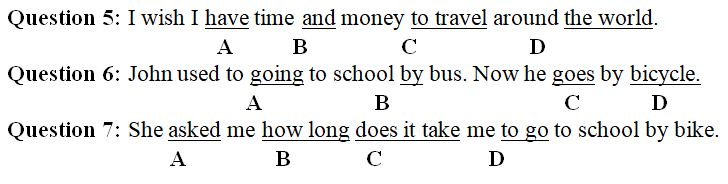
Mark the letter A, B, C or D on your answer sheet to indicate the correct answer to each of the following questions.
Question 8 : My parents once took me to Bat Trang village. I could make my own _________ there.
A. pottery
B. lacquer
C. painting
D. sculpture
Question 9 : _________ he’s spent a lot of money to redecorate his shop, he cannot make any more profit.
A. In order to
B. Although
C. So that
D. Because of
Question 10 : Osaka has become one of the _________ “liveable” city in Asia.
A. more
B. better
C. much
D. most
Question 11 : We _________ a really good restaurant near the central station.
A. found out
B. got over
C. took off
D. looked forward
Question 12 : Ha Noi City now is _________ it was 10 years ago.
A. not as large
B. much larger than
C. more large than
D. the largest
Question 13 : Huy got a bad mark for his English test. He must have been really _________.
A. disappointed
B. relaxing
C. interested
D. happy
Question 14 : Jane said that she _________ come and look after the children the following day.
A. would
B. was
C. has to
D. is going to
Question 15 : That church looks very old. When _________?
A. was it built
B. is it built
C. has it been built
D. did it build
Question 16 : She was really impressed _________ the friendliness of the local people.
A. with
B. by
C. in
D. on
Mark the letter A, B, C or D on your answer sheet to indicate the most suitable response to complete each of the following exchanges.
Question 17 : Mom, I’ve got the first rank in class this semester. - ………………
A. Well done
B. Thank you
C. Never mind
D. Let’s go
Question 18 : I will pick you up at eight o’clock on my way to the airport. - ……………….
A. For pleasure
B. Great. I’ll see you then.
C. I have a phone.
D. Would be.
Mark the letter A, B, C or D on your answer sheet to indicate the word(s) CLOSEST in meaning to the underlined word(s) in each of the following questions
Question 19 : Maths and English are compulsory subjects in my school.
A. required
B. difficult
C. interesting
D. optional
Question 20 : The council had to cancel the football match because of the storm.
A. come back
B. call off
C. set off
D. pass down
Mark the letter A, B, C or D on your answer sheet to indicate the word(s) OPPOSITE in meaning to the underlined word(s) in each of the following questions
Question 21 : : Lan is very depressed because here closest friend is moving to another city.
A. sad
B. disappointed
C. happy
D. delighting
Question 22 : Take off your hat when you go to the pagoda.
A. go on
B. pull down
C. take up
D. put on
Read the following passage and mark the letter A, B, C, or D on your answer sheet to indicate the correct word or phrase that best fits each of the numbered blanks
I’m fascinated (23) __________ traditional handicrafts. At weekends, I usually go to Bat Trang where I was born. It’s a (24) __________ village not far from Ha Noi center. My uncle and my aunt still live in Bat Trang and they own a big workshop there. In fact, my grandparents (25) __________ that workshop and some years ago, my uncle and my aunt (26) __________ the business because my grandparents are very old. My grandfather is a well-known artisan in the village. Every time I go there, he teaches me how (27) __________ things from clay such as pots, vase and bowls.
Question 23 :
A. in
B. of
C. by
D. with
Question 24 :
A. making hat
B. pottery
C. moulding
D. painting
Question 25 :
A. started
B. set
C. went
D. made
Question 26 :
A. looked after
B. took care
C. set up
D. took over
Question 27 :
A. to make
B. to do
C. to know
D. to find
Read the following passage and mark the letter A, B, C, or D on your answer sheet to indicate the correct answer to each of the questions
In Britain some families feel that learning at home is better than going to school. Home schooled children can choose when they want to learn. Does this sound more enjoyable than school?
Andrian is a science prodigy and he wants to start university by the age of fourteen. He finds school lessons easier than the ones he expects but making friends is more difficult. At home he can spend more time on his favourite subjects and is preparing to take many of his exams early. Does he ever take a break? “Yes”, he says “I don’t study subjects I’m not interested in.”
Holly’s parents weren’t happy with the local school. So they made a decision to teach her at home. Her favourite is history and she often goes to the museum to study. “I couldn’t do that before”, she says. “This is more interesting than school was.” Her parents are always happy to help her.
Andrian and Holly love learning at home, but some people think that studying at school is more useful because it trains you for adult life. It teaches you to be with people you don’t like, but it can also help you to make friends. Are these things more important than lessons? What do you think?
Question 28 : In Britain, people can learn at home or ____________________.
A. at school
B. at work
C. at the museum
D. at break
Question 29 : Andrian wants to start ____________________ when he’s 14.
A. school
B. subjects
C. lessons
D. university
Question 30 : He only studies things that he ____________________.
A. is interested in
B. isn’t happy with
C. feels easy
D. feels difficult
Question 31 : History is Holly’s ____________________.
A. favourite test
B. favourite subject
C. boring subject
D. only one subject
Question 32 : Why do some people think studying at school is ____________________?
A. easier
B. more useful
C. stressful
D. a waste of time
Finish the second sentence so that it has a similar meaning to the first one, beginning with the given words.
Question 33 : Helen started to learn Chinese in 2000.
⇒ Helen has....................................................................................
Question 34 : About thirty million people are watching this programme.
⇒ This programme..................................................................................
Question 35 : The boys said, “We have to try our best to win the match,”
⇒ The boys said that....................................................................................
Question 36 : She asked Lan how many members there were in her family.
⇒ She asked Lan:....................................................................................
Rewrite the sentences into a new one using the given words in brackets. Do not change the given words in any ways.
Question 37 : Many people think there is no city in Vietnam that is cleaner than Da Nang City. (the)
⇒.............................................................................................................
Question 38 : It rained very heavily. We cancelled the trip to the famous Bat Trang craft village. (since)
⇒.............................................................................................................
Question 39 : David has a good relationship with most of his colleagues. (gets)
⇒.............................................................................................................
Question 40 : Did you always eat sweets when you were small? (use)
⇒.............................................................................................................
Phòng Giáo dục và Đào tạo .....
Đề thi Giữa kì 1
Môn: Tiếng Anh 9
Thời gian làm bài: 90 phút
(Đề 3)
I. MULTIPLE CHOICE: (8 points)
Mark the letter A, B, C or D on your answer sheet to indicate the word whose underlined part differs from the other three in pronunciation in each of the following questions.
Question 1 : A. enjoyed B. invited C. mended D. lasted
Question 2 : A. museum B. sculpture C. drum D. cultural
Mark the letter A, B, C or D on your answer sheet to indicate the word that differs from the other three in the position of primary stress in each of the following questions.
Question 3 :
A. bamboo
B. village
C. workshop
D. famous
Question 4 :
A. enjoyment
B. pagoda
C. collection
D. business
Mark the letter A, B, C or D on your answer sheet to indicate the underlined part that needs correction in each of the following questions.
Question 5 : I (A) wish the sun (B) were shine (C)so that we could (D) go swimming.
Question 6 : (A) Pottery is (B) passing (C) down from artisans to trainees (D) so that they can maintain the art.
Question 7 : The trip (A) to the countryside was very (B) interested. We all (C) enjoyed (D) ourselves a lot.
Mark the letter A, B, C or D on your answer sheet to indicate the correct answer to each of the following questions.
Question 8 : I came here…………………..I could see you.
A. so that
B. in order
C. after
D. despite
Question 9 : She presented me with a new blanket on which she …………some beautiful flowers.
A. knitted
B. embroidered
C. moulded
D. carved
Question 10 : The members of the family ate hamburgers while Peter ………….baseball.
A. is playing
B. plays
C. was playing
D. has been playing
Question 11 : Singers and movies stars always want to look ……………. When they appear in public.
A. fashionable
B. colorful
C. worldwide
D. occasional
Question 12 : The boy looks …………..when he sees his parents at the door of the classroom.
A. relaxed
B. confused
C. confident
D. confusing
Question 13 : Jimmy walked down the road without looking………….anybody.
A. for
B. up
C. at
D. after
Question 14 : We think our parents should ………………..in our shoes.
A. put ourselves
B. put themselves
C. let them
D. put them
Question 15 : The teacher let me ……..home early because I felt ill.
A. go
B. going
C. went
D. to go
Question 16 : Ha Noi City now is……… ………than it was 10 years ago.
A.as large
B. more large
C. much larger
D. the largest
Mark the letter A, B, C or D on your answer sheet to indicate the most suitable response to complete each of the following exchanges.
Question 17 : Nam: Thank you so much for showing me around today.
Tuan: ……………………, It’ll be good fun.
A. That’s ok
B. Thank you so much.
C. Yes, please
D. Sure
Question 18 : Peter: You must be Mary’s mother.
Mary’s mother: …………………., I am.
A. You are welcome
B. Certainly, I am
C. That’s right
D. No worries
Mark the letter A, B, C or D on your answer sheet to indicate the word(s) CLOSEST in meaning to the underlined word(s) in each of the following questions.
Question 19 : The village is located in a valley.
A. situated
B. replaced
C. put
D. sited
Question 20 : We spent an enjoyable evening talking about old times.
A. pleasant
B. boring
C. comfortable
D. free
Mark the letter A, B, C or D on your answer sheet to indicate the word(s) OPPOSITE in meaning to the underlined word(s) in each of the following questions.
Question 21 : Is math a compulsory subject in Vietnamese high school?
A. required
B. despised
C. difficult
D. optional
Question 22 : The doctor advised Peter to give up smoking.
A. stop
B. continue
C. finish
D. consider
Read the following passage and mark the letter A, B, C, or D on your answer sheet to indicate the correct word or phrase that best fits each of the numbered blanks.
Teenagers today live in a very competitive world. It is (23)……………important than ever to succeed at school if you hope to (24 )…….. a chance in the job market afterwards. It’s no wonder that many young people worry (25)………...letting down their parents, their peers and themselves. To try to please everyone, they take on too (26)…………….tasks until it becomes harder and harder to balance homework assignments, parties, sports activities and friends. The result is that young people (27)…………from stress.
Question 23 :
A. more
B. much
C. s little
D. very
Question 24 :
A. gain
B. achieve
C. have
D. retain
Question 25 :
A. with
B. about
C. of
D. on
Question 26 :
A. few
B. many
C. much
D. a few
Question 27 :
A. suffer
B. have
C. get
D. catch
Read the following passage and mark the letter A, B, C, or D on your answer sheet to indicate the correct answer to each of the questions.
MY HOME TOWN
I was born in Newcastle, a city in the North East of England. Newcastle is on the bank of the River Tyne. It is a quite big city of about 200,000 inhabit¬ants. There is a cathedral and a university. There are five bridges over the River Tyne, which link Newcastle to the next town, Gateshead, where there is one of the biggest shopping centres in the world, the Metro Centre.
A few years ago, the main industries were shipbuilding and coal mining, but now the chemical and soap industries are important.
I moved from Newcastle ten years ago but I often return. I miss the people, who are so warm and friendly, and I miss the wild, beautiful countryside near the city, where there are so many hills and streams.
Question 28 : Newcastle is ………………………………………………
A. a city near the North East of England
B. a city in the North East of England
C. a city in the North of England
D. a small town in England
Question 29 : Newcastle has……………………………………………
A. one of the biggest shopping centers
B. a wild, beautiful countryside
C. a population of about 200,000 people
D. one bridge that links it to the next town
Question 30 : Gateshead has one of……………………………..in the world.
A. the largest rivers
B. the most important shipbuilding industries
C. the most beautiful countrysides
D. the biggest shopping centres
Question 31 : According to the passage, the writer………………………
A. is still living in Newcastle
B. has never returned to Newcastle
C. doesn’t live in Newcastle any more
D. has come back to live in Newcastle
II. WRITING: (2 points)
Rewrite the sentences so that it has a similar meaning to the first one.
Question 32 : Some people think learning English is not difficult.
⇒ Some people think it is……………………………………………………………………….………
Question 33 : “Don’t go to the park when it’s dark”, said Mrs Brown.
⇒ Mrs. Brown……………………………………………………………………………………………
Question 34 : Vietnamese people have used different materials to make the ao dai.
⇒ Different materials……………………………………………………………………………………..
Question 35 : I don’t remember exactly when my parents started this workshop. (set up)
⇒ I don’t ………………………………………………………………………………………………..
Make one sentence from two. Use the word(s) in brackets.
Question 36 : I am going to the cinema with my friend this weekend to see the lastest 6D Ocean Explore film. (in order that)
.................................................................................................................................
Question 37 : We got lost. We asked a policeman for the way. (because)
.................................................................................................................................
Question 38 : He can’t speak to Tim at the moment. He’s sleeping. (so)
.................................................................................................................................
Question 39 : They won’t buy the new car. They save enough money. (until)
.................................................................................................................................
Question 40 : Despite the bad weather, we went out for a picnic. (although)
.................................................................................................................................
Phòng Giáo dục và Đào tạo .....
Đề thi Giữa kì 1
Môn: Tiếng Anh 9
Thời gian làm bài: 90 phút
(Đề 4)
I. Circle the word of which the underlined sound is pronounced differently from the others
1. A. divide B. religion C. primary D. comprise
2. A. compulsory B. industry C. hamburger D. eruption
3. A. enjoyed B. invited C. mended D. lasted
4. A. machine B. chair C. check D. child
II. Choose the correct answer for each sentence
5.Vietnamese people are very ……….......... .
A. friend
B. friendly
C. friendship
D. friendliness
6. Let’s about my problem.
A. talk
B. talking
C. to talk
D. talked
7. Vietnam is a …………country. The weather is usually hot there.
A. tropical
B. cold
C. warm
D. heat
8. The doctor ...................... me not to stay up too late at night.
A. advised
B. suggested
C. insisted
D. forced
9. She was sick yesterday,……….she was absent from school .
A. since
B. so
C. because
D. but
10. My friend is fond of ……….TV in the evening.
A. watching
B. to watch
C. watch
D. watched
11. Some designers have taken______ from Vietnam’s ethnic minorities.
A. inspiration
B. education
C. impression
D. tradition
12. 12. Jeans ______all over the world today.
A. is sold
B. was sold
C. will be sold
D. are sold
III. Give the correct form of the verbs in brackets.
13. I (see) .............................................her recently.
14. The children often love (watch) .......................cartoons.
15. I wish It (not rain) ............................................. tomorrow.
16. This exercise must (do) ...................................carefully.
IV. Give the correct form of these words
17. These clothes look very ............................ . (fashion)
18. Some designers have ...................... the Ao Dai by priting lines of poetry on it. (modern)
19. Nguyen Du is a famous Vietnamese ………………. . ( poem )
20. He always wears a ……………….shirt. ( stripe )
V. Read the following passage and choose the best answer.
We don’t only choose clothes to make us look…21…., we also use them to tell the world …22….our personality. The clothes we wear and our …23….as a whole give other people useful information about what we think and…24….we feel. If we feel cheerful, we usually wear …25….clothes and if we feel …26….we sometimes put on dark clothes. But why do teenagers wear black so…27….? Is it because they feel miserable all …28….? This is unlikely to be the case. It is probably just because it is …29….to wear black, and young people they are real fans of …30…. .
21.
A. attract
B. attractive
C. attractively
D. attraction
22.
A. of
B. with
C. by
D. about
23.
A. appear
B. appearance
C. appeared
D. appearing
24.
A. which
B. what
C. how
D. when
25.
A. colorful
B. colors
C. colorfully
D. colorless
26.
A. depress
B. depressed
C. depressing
D. depression
27.
A. frequent
B. frequency
C. frequently
D. frequenty
28.
A. the time
B. the day
C. the week
D. the month
29.
A. fashion
B. fashionable
C. fashioner
D. fashioned
30.
A. fashion
B. fashionable
C. fashioner
D. fashioned
VI. Listen to a man talking about the findings of a survey on teenagers’ stress. Decide if the following statements are true (T) or false (F). (unit 3)
31. Unlike teenagers, adults don’t get stressed. .................
32. 30 – to – 70 - year olds are experiencing higher stress level than they consider to be healthy. ................
33. The most common reason for teenagers‟ stress is school. .................
34. Thinking about what to do after high school is not a source of stress for teens..................
35.Stress affects teens emotionally only. .................
VI. Rewrite these sentences (1m)
36. What a pity! I can’t speak English well.
I wish..............................................................................
37.They built this hotel six months ago.
This hotel ..............................................................................
38. He likes wearing Jeans.
He is interested..............................................................................
39. It isn’t necessary for me to wear the Ao dai today.
I don’t ..............................................................................
40. Hanoi capital is generally not as exciting as Ho Chi Minh city. (more)
Ho Chi Minh city.........................................................................................................
Xem thêm các đề kiểm tra, đề thi Tiếng Anh 9 chọn lọc, có đáp án hay khác:
Giáo viên & Phụ huynh quan tâm Đề thi Giữa kì 1 Tiếng Anh 9 bản word có lời giải chi tiết, dễ dàng chỉnh sửa và cập nhật hàng năm mời Xem thử.
Xem thêm đề thi Tiếng Anh 9 có đáp án, hay khác:
Xem thêm đề thi lớp 9 các môn học có đáp án hay khác:
Tài liệu giáo án lớp 9 các môn học chuẩn khác:
TÀI LIỆU CLC DÀNH CHO GIÁO VIÊN VÀ PHỤ HUYNH LỚP 9
Bộ giáo án, bài giảng powerpoint, đề thi file word có đáp án 2026 tại https://tailieugiaovien.com.vn/
Hỗ trợ zalo: VietJack Official
Tổng đài hỗ trợ đăng ký: 084 283 45 85
 Đề thi vào 10 các sở Hà Nội, Tp. Hồ Chí Minh...
41 tài liệu
Đề thi vào 10 các sở Hà Nội, Tp. Hồ Chí Minh...
41 tài liệu
 Giáo án Word 9
95 tài liệu
Giáo án Word 9
95 tài liệu
 Đề thi giữa kì, cuối kì 9
254 tài liệu
Đề thi giữa kì, cuối kì 9
254 tài liệu
 Chuyên đề dạy thêm Toán, Lí, Hóa... 9
71 tài liệu
Chuyên đề dạy thêm Toán, Lí, Hóa... 9
71 tài liệu
 Đề thi HSG 9
8 tài liệu
Đề thi HSG 9
8 tài liệu
 Bài giảng Powerpoint 9
42 tài liệu
Bài giảng Powerpoint 9
42 tài liệu
Công cụ giáo viên (2048.VN)
Tạo- trộn đề thi miễn phí từ file PDF, Word, Giao bài nhanh chóng, Hoàn toàn Free
Loạt bài Đề thi các môn học lớp 9 học kì 1 và học kì 2 được biên soạn bám sát chương trình lớp 9 mới.
- Giáo án lớp 9 (các môn học)
- Giáo án điện tử lớp 9 (các môn học)
- Giáo án Toán 9
- Giáo án Ngữ văn 9
- Giáo án Tiếng Anh 9
- Giáo án Khoa học tự nhiên 9
- Giáo án Vật Lí 9
- Giáo án Hóa học 9
- Giáo án Sinh học 9
- Giáo án Địa Lí 9
- Giáo án Lịch Sử 9
- Giáo án GDCD 9
- Giáo án Tin học 9
- Giáo án Công nghệ 9
- Đề thi lớp 9 (các môn học)
- Đề thi Ngữ Văn 9 (có đáp án)
- Đề thi Toán 9 (có đáp án)
- Đề thi Tiếng Anh 9 mới (có đáp án)
- Đề thi Tiếng Anh 9 (có đáp án)
- Đề thi Khoa học tự nhiên 9 (có đáp án)
- Đề thi Lịch Sử và Địa Lí 9 (có đáp án)
- Đề thi GDCD 9 (có đáp án)
- Đề thi Tin học 9 (có đáp án)
- Đề thi Công nghệ 9 (có đáp án)